Dan Macfarlane was an early member of the Cedar Dramatic Association where his bearing and deep voice made him successful in both tragedies and farces. He also joined other Scots as well as English and Welsh in the choir where he met his future wife, Temperance Keturah Haight, the daughter of Isaac and Eliza Ann Haight. Through this marriage, his step-father became his father-in-law.
Dan Macfarlane was an early member of the Cedar Dramatic Association where his bearing and deep voice made him successful in both tragedies and farces. He also joined other Scots as well as English and Welsh in the choir where he met his future wife, Temperance Keturah Haight, the daughter of Isaac and Eliza Ann Haight. Through this marriage, his step-father became his father-in-law.
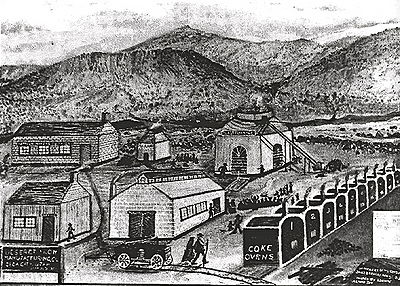
In moving to Cedar City, Daniel Macfarlane had settled in an area dominated by the Deseret Iron Company, known more familiarly as the Ironworks. After iron ore and coal deposits were discovered in the region, Cedar City was founded. In the first years of 1851-52, they investigated whether the region had the necessary raw materials – iron ore, limestone, wood, coal, and waterpower – to support smelting on a large scale. After confirming the presence of the necessary materials and relying heavily on the British Isles immigrants who had worked in iron-related industries in Great Britain, they set to building an iron manufacturing plant. They sited the ironworks at the mouth of Coal Creek near the present location of Cedar City. They mined the coal up canyon and transported it by team and wagon to the furnace located on the stream bank below the mouth of the canyon. The iron ore was transported from nearby Iron Springs by wagon. In 1852, after a small test furnace produced a low quality pig iron, they set about building a full-scale blast furnace.
In moving to Cedar City, Daniel Macfarlane had settled in an area dominated by the Deseret Iron Company, known more familiarly as the Ironworks. See [[Summary of Deseret Iron Company]] for a brief summary of its early development.
Progress was impeded, however, in 1853-54 during the Walker War. They shifted their energies from iron making to “forting up” to increase their safety. After a peace treaty was reached with the Ute chief Wakara in 1854, they returned to improving the ironworks. By 1855, they had achieved their greatest success with a sustained run of the furnace producing several tons of pig iron. But most of the runs both before and after failed to achieve a sustained run producing good quality iron. One problem was the fickle nature of Coal Creek, which continued to alternate between flooding and droughts. They determined to develop a more dependable source of power.
In April 1857, the delivery of a new steam engine from Great Salt Lake City seemed to breathe new life for the Ironworks. After its arrival, they built a new room to house the engine, connected its boiler to a steady water supply and modified the furnace to accommodate the engine. Many settlers in Cedar City worked long hours in the ironworks. In early June they started an iron run using the steam engine. However, the new machinery created its own set of problems. Through the end of July, they experimented with different configurations of furnace, engine and piping, attempting to optimize the blast furnace. In August, they installed a reservoir to provided filtered water to the steam engine to improve its performance. From late August to early September, shortly before the crisis involving the passing Arkansas emigrant company, they began a new furnace run. But it, too, ended in failure, probably around the time that a dispute arose between some community members and several of those in the passing Arkansas wagon train.
In April 1857, the delivery of a new steam engine from Great Salt Lake City seemed to provide the answer. After its arrival, they built a new room to house the engine, connected its boiler to a steady water supply and modified the furnace to accommodate the engine. Many settlers in Cedar City worked long hours in the ironworks. In early June they started an iron run using the steam engine. However, the new machinery created its own set of problems. Through the end of July, they experimented with different configurations of furnace, engine and piping, attempting to optimize the blast furnace. In August, they installed a reservoir to provided filtered water to the steam engine to improve its performance. From late August to early September, shortly before the crisis involving the passing Arkansas emigrant company, they began a new furnace run. But it, too, ended in failure, probably around the time that a dispute arose between some community members and several of those in the passing Arkansas wagon train.
However, other than some small transactions at the company store, the Deseret Iron Company's ledger is silent on Dan Macfarlane for this period. It appears that he may have pursued farming and livestock raising. His brother John played a role at the Ironwork during this time of intense activity in mid-1857. But there is no evidence that Dan Macfarlane was involved.
However, other than some small transactions, the Deseret Iron Company's ledger is silent on Dan Macfarlane for this period. It appears that he may have pursued agriculture and livestock raising. His brother John played a role at the Ironwork during this time of intense activity in mid-1857. But there is no evidence that Dan Macfarlane played a role.
=== In the Iron Military District: Dan Macfarlane, Adjutant to Capt. Joel White, Company D, Isaac Haight's 2nd Battalion ===
=== In the Iron Military District: Dan Macfarlane, Adjutant to Capt. Joel White, Company D, Isaac Haight's 2nd Battalion ===
Revision as of 20:32, 25 January 2012
Daniel S. Macfarlane's background and his involvement in and statements about the Mountain Meadows Massacre
Daniel Sinclair Macfarlane was born to John and Annabella Sinclair Macfarlane in Stirlingshire in the Scottish highlands. In 1842, his mother was impressed with the message of the newly arrived missionaries of Mormonism and joined the new church. His father died in 1846 when Daniel was less than ten. During the 1840s, several other members of the Macfarlane family joined the Mormons and attended the Glasgow conference. They were unable to immigrate, however, until the church established its Perpetual Emigration Fund to assist indigent European converts to immigrate to Utah Territory in the American West.
Immigration to America and onto Utah
With that assistance, Daniel Macfarlane, his mother, Annabella Macfarlane, and his older brother, John Menzies Macfarlane, began their journey in early 1852 to the Mormon "Zion" in Utah. In Liverpool, they met Mormon elder Isaac C. Haight and traveled under his direction in their voyage. After the long, arduous journey, they arrived in Utah in the fall and settled in Bountiful.
Sketch - Iron works.jpgTo Cedar City and the Ironworks
The following year they joined their friend Isaac Haight in settling in Cedar City in the newly-founded Iron Mission. Daniel's mother Annabella became a plural wife of Isaac Haight and Daniel became his step-son.
Dan Macfarlane was an early member of the Cedar Dramatic Association where his bearing and deep voice made him successful in both tragedies and farces. He also joined other Scots as well as English and Welsh in the choir where he met his future wife, Temperance Keturah Haight, the daughter of Isaac and Eliza Ann Haight. Through this marriage, his step-father became his father-in-law.
In moving to Cedar City, Daniel Macfarlane had settled in an area dominated by the Deseret Iron Company, known more familiarly as the Ironworks. See Summary of Deseret Iron Company for a brief summary of its early development.
In April 1857, the delivery of a new steam engine from Great Salt Lake City seemed to breathe new life for the Ironworks. After its arrival, they built a new room to house the engine, connected its boiler to a steady water supply and modified the furnace to accommodate the engine. Many settlers in Cedar City worked long hours in the ironworks. In early June they started an iron run using the steam engine. However, the new machinery created its own set of problems. Through the end of July, they experimented with different configurations of furnace, engine and piping, attempting to optimize the blast furnace. In August, they installed a reservoir to provided filtered water to the steam engine to improve its performance. From late August to early September, shortly before the crisis involving the passing Arkansas emigrant company, they began a new furnace run. But it, too, ended in failure, probably around the time that a dispute arose between some community members and several of those in the passing Arkansas wagon train.
However, other than some small transactions at the company store, the Deseret Iron Company's ledger is silent on Dan Macfarlane for this period. It appears that he may have pursued farming and livestock raising. His brother John played a role at the Ironwork during this time of intense activity in mid-1857. But there is no evidence that Dan Macfarlane was involved.
In the Iron Military District: Dan Macfarlane, Adjutant to Capt. Joel White, Company D, Isaac Haight's 2nd Battalion
A 2nd lieutenant in a platoon in Company D in early 1857, Macfarlane was assigned as adjutant to Captain Joel White of Company D, one of the Cedar City militia companies attached to Major Isaac Haight's 2nd Battalion. His older brother, John Menzies Macfarlane, was adjutant to Major Haight. In September 1857, when the Arkansas emigrant train became besieged at Mountain Meadows, Macfarlane was among those who mustered there. See A Basic Account for a full description of the massacre.
In the recently-published statement of Ellott Willden, he maintained that Dan Macfarlane was in the small continent consisting William C. Stewart, Philip Klingensmith and others who encountered two emigrants seeking help from the Mormon settlements on (probably) Wednesday evening. Willden said that Klingensmith killed one of them; he did not identify who killed the other one.
Macfarlane was at the military council at the Meadows in the evening of Thursday the 10th. On Friday the 11th, according to John D. Lee, Macfarlane was on horseback, carrying "orders from one part of the field to another." For instance, while Major Lee was negotiating with the Arkansas emigrants inside their wagon fortification, Dan Macfarlane carried a message from Major Higbee to Lee to hurry the emigrants along.
As the emigrant column proceeded north, Macfarlane headed the cluster of women and children on horseback. As the firing commenced, Macfarlane was among two or three on horseback who ranged over the field, preventing any emigrants from escaping. Lee later claimed that the Scottish emigrant Macfarlane was among the most violent in the massacre but his account is uncorroborated. On the day after the massacre, Macfarlane heard Col. William Dame and Major Isaac Haight arguing over which one was responsible for the orders that led to the massacre. "Daniel McFarlan" was included in the 1859 arrest warrant. However, he did not testify in either of the Lee trials of 1875 or 1876.
Remaining in Cedar City
In 1862, Macfarlane married Keturah Haight, who bore him twelve children. In 1879, he took a second wife, marrying Elizabeth Ford, a Welsh emigrant, who bore him nine children. His last child was born when he was 63.
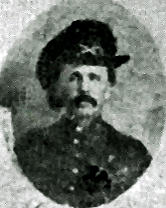
Daniel s macfarlane 2a.jpgService During the Black Hawk War
During the mid to late 1860s, the Black Hawk War caused the militia units in southern Utah to be reorganized and strengthened to provide greater security to the white settlers. Daniel Macfarlane was in some of the militia units that patroled for raiding Paiute and, later, Navajo Indians.
Other Pursuits
However, Macfarlane was known for more than his involvement in the militia and other martial pursuits. Both Daniel and his brother John were noted musicians with strong singing voices. One fiddler was heard to say of his singing, "When you ask Dan Macfarlane to sing bass, you want to make sure you have a strong foundation under your house."
In the late 1870s, Macfarlane served as a missionary to his native Scotland.
In 1892, Mormon Church historian Andrew Jenson interviewed many of the surviving Mountain Meadows militiamen, including Daniel Macfarlane. His accounts are somewhat contradictory but contain important details. Jenson's interviews with others also revealed some details on Macfarlane's role, described above. In the ongoing dispute over the relative responsibility of William Dame and Isaac Haight for the orders from the Iron County 10th Regiment, Macfarlane sided more with Haight than Dame. But Macfarlane may have been biased because of his strong familial ties to Isaac Haight.
In 1896, nearly four decades after the massacre, Macfarlane prepared an affidavit of some events surrounding it. John M. Higbee, Joel W. White, and William Tait also made affidavits around the same time. This Macfarlane affidavit is of lesser importance and value. Somewhat vague and conclusionary in nature, its primary purpose appears to have been to minimize the role of John M. Higbee in the massacre and rehabilitate his reputation. Higbee had been under indictment for more than twenty years but the criminal prosecution had only recently been formally dismissed in 1896.
Final Years
Later census records list Macfarlane as a "day laborer" who did "odd jobs." He lived for more than 60 years in Cedar City, died in 1914 and was buried there. He was survived by his two wives and numerous children.
Affidavit of Daniel Macfarlane, June 29, 1896, in Brooks, The Mountain Meadows Massacre, Appendix III, 235-38; Bagley, Blood of the Prophets, 126, 142, 145, 146, 277; Lee, Mormonism Unveiled, 232, 237, 240, 254, 283, 380; Lee Trial transcripts; Macfarlane, Yours Sincerely, John M. Macfarlane, 35-37, 41-45, 49, 50, 55-56, 64, 77, 79; Merkley, ed., Monuments to Courage: A History of Beaver County, 134; New.familysearch.org; Seegmiller, A History of Iron County, 55-56, 64-69; Shirts, A Trial Furnace, 489, 492; Turley and Walker, Mountain Meadows Massacre: The Jenson & Morris Collections, 16-17, 86-87, 88-108 (rough notes of interview), 109-119 (formal report), 189; Walker, et al, Massacre at Mountain Meadows, 157, 179, 190, 193, 197-98, Appendix C, 260.
For full bibliographic information see Bibliography.
External Links
For further information on Daniel S. Macfarlane see: